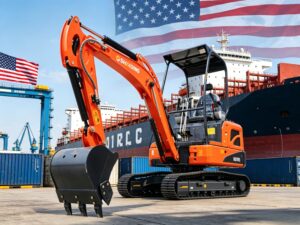
Since the beginning of 2026, the internationalization of my country’s construction machinery industry has accelerated significantly. While large-scale equipment is being exported globally, domestically produced “compact” machinery—specifically micro and small excavators—is quietly taking overseas markets by storm. Export volumes have surged, becoming a core driver of industry growth.
According to the latest statistics from the China Construction Machinery Association, my country’s cumulative excavator exports reached 85,208 units from January to July 2026, a year-on-year increase of 31.7%. Small excavators performed particularly well; exports in July alone rose by 17.5% year-on-year, reflecting sustained strong demand in overseas markets. Construction machinery industrial clusters, exemplified by the one in Jining, Shandong, have become key engines for the global expansion of small excavators. In the Jining High-tech Zone, over 220 enterprises are engaged in the R&D, production, and component supply for excavators. With a local component sourcing rate exceeding 80% and a supply radius of less than 30 kilometers, this efficient supply chain synergy has provided a solid foundation for the explosive growth in exports.
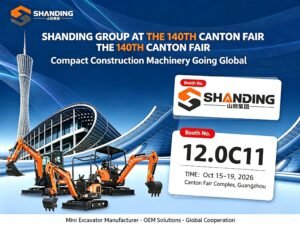
The popularity of domestically produced small excavators owes much to the boost from social media and innovative marketing strategies. A micro-excavator from Shanding, weighing just 1.2 tons, went viral on overseas platforms after a Norwegian blogger posted a review video, garnering over 4 million views. The company quickly signed the blogger as its Nordic regional agent, turning an “internet sensation” into a top salesperson. Simultaneously, it launched live-streamed factory tours, showcasing production and testing processes to global customers in real-time. This transparent and intuitive marketing approach earned the trust of overseas clients; the company now ships an average of over 260 small and micro excavators daily, with export volumes surpassing 10,000 units in the first four months of the year alone.
Industry insiders point out that the key to this explosive export growth lies in cost advantages and consistent quality. Bulk procurement costs are merely one-third or even one-quarter of those for comparable foreign products. This competitive edge stems from continuous technological upgrades and a comprehensive industrial chain ecosystem. For instance, the Shanding Group invested over 30 million yuan to upgrade its laser cutting production line, raising sheet metal utilization from 70% to 85%—thereby reducing production costs while ensuring product quality. Furthermore, by precisely targeting niche demands—such as residential garden maintenance and small-scale construction projects—and continuously advancing R&D focused on lightweight designs and scenario-specific customization, these enterprises have further expanded their global reach.
Industry analysts believe that the robust growth in mini-excavator exports not only epitomizes the competition on speed and quality within this niche sector of “Made in China” manufacturing, but also signals a strategic shift in the country’s construction machinery industry. Driven by technological innovation and supply chain synergy, the industry is transitioning from “price wars” to “value-based competition” in the global market.